Imagine, for a moment, enjoying the rich, malty notes and crisp hop aromas of a refreshing beer, yet without the intoxicating effects. The concept might seem elusive, particularly if your past encounters with non-alcoholic (N/A) beer have left you with a sense of disappointment, a thin, watery imitation that falls far short of the real thing. Indeed, many homebrewers and craft beer aficionados have long wrestled with this very dilemma, seeking a satisfying low-alcohol option that doesn’t sacrifice flavor or body. This journey often leads down paths of expensive hop water or commercially produced N/A beers that, as our host in the video above aptly points out, can be “confusingly bad.”
For those of us who appreciate the art of brewing and the nuanced complexities of a well-crafted beverage, the quest for a truly good non-alcoholic beer has been akin to searching for a unicorn. We often turn to substitutes like hop water, which, while generally more palatable than traditional N/A beers, comes with its own financial burden. Paying $9 for a four-pack of hop water that costs more than a comparable IPA feels like a paradox, forcing many to consider making their own. It was precisely this pursuit of cost-effective, high-quality hop water that led to a remarkable, accidental discovery: a method to produce a delicious, low-alcohol brew that genuinely mimics the character of a light, hoppy beer.
The Genesis of a Great Non-Alcoholic Beer
The innovation for this exceptional non-alcoholic beer didn’t stem from a direct intention to brew N/A varieties, but rather from an experiment to enhance homemade hop water. Initially, simply boiling hops in water and then chilling and carbonating often resulted in a product with “rough edges”—lacking the depth and mouthfeel that make beer so appealing. The turning point arrived with the idea of introducing a tiny amount of dextrose or dry malt extract along with yeast to naturally carbonate the hop water. This addition wasn’t merely for effervescence; it was theorized to mellow the hop bitterness and infuse a subtle layer of complexity, transforming a basic hop infusion into something far more sophisticated. In essence, this step acted like adding a whisper of a rhythm section to a simple melody, giving it unexpected depth.
The results of this initial experiment were dramatic, elevating the hop water significantly. This technique became the preferred method for crafting hop water, demonstrating that a small amount of sugar, when fermented, could unlock new dimensions of flavor and texture. However, a new thought soon sparked: if only a minimal amount of sugar was necessary for natural carbonation in a keg, could residual sugars from spent brewing grains be utilized? Homebrewers know well that even the most efficient mash leaves some fermentable sugars behind. This insight paved the way for an even more ingenious approach, transforming what was once waste into the foundation for a delightful low-alcohol beverage.
Unlocking Flavor with the Parti-Gyle Mash Technique
The secret to achieving the rich, beer-like qualities in this non-alcoholic beer lies in a classic brewing technique: the parti-gyle mash. This method, historically employed by brewers to produce multiple beers of varying strengths from a single mash, involves collecting additional “runnings” from the spent grains after the primary wort has been drawn off. In our context, after draining the grains for a typical brew day (e.g., for a 5% ABV beer or less), hot water, ideally around 120-130°F (the video mentions “120-some degrees”), is slowly poured over the grain bed. This process, often referred to as a quick sparge, washes out any remaining fermentable sugars and, crucially, extracts additional non-fermentable sugars and malt flavors that contribute to residual sweetness and body.
This secondary extraction is critical because it introduces a spectrum of malt character and mouthfeel that is conspicuously absent in most traditional N/A beers or simple hop waters. By stirring the grains gently as the water is added, maximum contact is ensured, optimizing the extraction of these precious sugars and flavors. Consequently, the resulting liquid, often described as “second runnings,” possesses a depth and complexity that far exceeds plain water. This flavor profile moves beyond mere hop water, taking on the characteristics of a light hoppy beer, complete with a nuanced malty backbone. It’s akin to layering a rich bassline and subtle percussion under the vibrant melody of the hops.
Controlling Alcohol Content: The N/A Imperative
One of the most crucial aspects of brewing a true non-alcoholic beer is meticulously controlling its alcohol content. N/A beers are legally defined as having 0.5% ABV (alcohol by volume) or less. The natural carbonation process, which relies on yeast fermenting sugar to produce CO2, also inevitably creates a small amount of alcohol. This inherent duality means careful planning is required to ensure the final product remains within the N/A threshold. The ingenious part of the parti-gyle method is that the amount of fermentable sugar extracted can be precisely managed to stay below this critical limit.
To ensure your parti-gyle non-alcoholic beer doesn’t inadvertently become a low-alcohol beer (which is typically above 0.5% but still lower than standard beers), it is imperative to monitor the initial mash parameters. Specifically, if the primary beer being brewed from which you are taking your second runnings is around 5% ABV or less, you are more likely to yield a starting gravity (SG) for your N/A batch of approximately 1.005. This extremely low starting gravity, while sounding counter-intuitive for a beer, is precisely what you need. It indicates a minimal amount of fermentable sugar, just enough for carbonation without significant alcohol production. Measuring with a hydrometer is essential here, providing a clear window into the sugar content, much like a navigator relies on a compass to stay on course.
The Brewing Process: Hops, Yeast, and Sealed Fermentation
Once your parti-gyle wort is collected and its starting gravity confirmed, the brewing process continues with familiar steps, albeit with a few key modifications. First, the wort needs to be brought to a boil. This sterilizes the liquid and prepares it for hop additions. When it comes to hops, experimentation is encouraged, but a good starting point suggested in the video is to keep the total hop additions to 5 ounces or less. Using more than this, especially with such a light base, can result in an overwhelmingly bitter or vegetal flavor. Consider varieties known for aroma and flavor rather than just bittering, such as Citra, Mosaic, or Cascade, to impart pleasant fruity or floral notes.
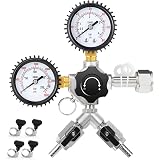
After the boil, the wort must be chilled rapidly to yeast pitching temperature. Aeration is then vital to provide the yeast with the oxygen it needs for a healthy fermentation, even if the fermentation itself is minimal. For yeast, you don’t need a large amount; a small pitch of any clean, neutral ale yeast will suffice. The most critical deviation from standard brewing, however, comes during fermentation: the beer must be fermented in a sealed keg. Unlike traditional fermentation where an airlock allows CO2 to escape, sealing the keg traps the CO2 produced by the yeast, naturally carbonating the non-alcoholic beer during the fermentation process itself. This ingenious technique leverages the very act of fermentation to achieve effervescence without external force carbonation. Allow the sealed keg to ferment at room temperature for a couple of weeks, then chill it to serving temperature in a kegerator. If, by chance, it’s not bubbly enough, you can always make up the difference with a brief, gentle force carbonation from a CO2 tank.
Brewing Up Answers: Your Non-Alcoholic Beer Q&A
What is non-alcoholic (N/A) beer?
Non-alcoholic beer allows you to enjoy the taste and aroma of beer without the intoxicating effects. It is legally defined as having 0.5% alcohol by volume (ABV) or less.
Why is it often difficult to find good non-alcoholic beer?
Many commercially produced N/A beers can taste thin and watery, and other alternatives like hop water can be quite expensive. This makes finding a flavorful low-alcohol option challenging.
What special brewing technique is used to create the flavor for this non-alcoholic beer?
This method uses a classic brewing technique called a “parti-gyle mash.” It involves collecting additional liquid, called “second runnings,” from spent grains after a primary beer has been brewed.
How is the carbonation achieved for this non-alcoholic beer?
Carbonation is achieved naturally by fermenting the beer in a sealed keg with a small amount of yeast. The CO2 produced by the yeast during this process gets trapped, making the beer bubbly.