Mastering all-grain homebrewing involves meticulous attention to process and a keen understanding of your equipment, as thoroughly demonstrated in the accompanying video. Crafting a seasonal brew like the Great Pumpkin Charlie Brown Ale offers an excellent opportunity to refine these skills, from yeast preparation to final carbonation. This detailed guide expands upon the techniques and equipment showcased, providing a deeper dive into achieving consistent, high-quality results in your own home brewery.
The Foundation of Flavor: Recipe & Ingredient Selection
The success of any beer begins with a well-designed recipe and quality ingredients. For the Great Pumpkin Charlie Brown Ale, a basic grain bill is complemented by a single bittering hop addition, which simplifies the brewing process. The unique character truly emerges from the pumpkin spice blend, strategically added near the end of the boil to capture its aromatic essence without overwhelming the palate. This delicate balance ensures the spice is a subtle highlight rather than a dominant force, appealing even to those who typically avoid overly pumpkin-flavored beers.
Selecting your grains, hops, and spices with care significantly influences the final product. Understanding the role of each component, from the malt’s fermentable sugars to the hops’ bitterness and aroma, is fundamental. For seasonal ales, experimenting with spice combinations and addition timings allows for personalized flavor profiles. This iterative process of brewing and refining is a hallmark of dedicated homebrewers.
Elevating Your Brew: The Power of Yeast Starters
One of the most impactful upgrades to a homebrewer’s practice is the consistent use of yeast starters. As highlighted in the video, a healthy yeast starter ensures a robust and rapid fermentation, often showing activity within just a few hours. This is a significant improvement over pitching directly from a fresh packet, which can lead to a longer lag phase and potential off-flavors.
A yeast starter involves propagating a small amount of yeast in a nutrient-rich wort solution before pitching it into the main batch. This process dramatically increases the cell count and vigor of the yeast, preparing it to efficiently consume sugars and produce alcohol. Healthier yeast ferments more cleanly, reduces the risk of stalls, and contributes to the overall clarity and flavor stability of your beer. For any intermediate brewer seeking consistent results, integrating yeast starters into every brew day is a highly recommended practice.
Evolution of a Brew System: Towards All-Electric Efficiency
Many dedicated homebrewers continuously evolve their brewing setup, often progressing towards more automated and efficient systems. The speaker’s journey towards an all-electric, three-vessel, one-level system exemplifies this common progression. Moving away from propane tanks offers several advantages, including precise temperature control, enhanced safety, and a cleaner brewing environment. The initial investment in an electric system is often offset by its long-term benefits in terms of consistency and convenience.
Components like quick disconnects and the future integration of three-way valves streamline the brewing process, minimizing manual intervention and reducing the risk of contamination. A well-designed system, where each piece of equipment serves a purpose in the final configuration, prevents redundant purchases. This thoughtful approach to system development ensures that every upgrade contributes to a more sophisticated and enjoyable brewing experience, ultimately leading to higher quality beer.
Precision Mashing: Recirculation & Temperature Control
The mashing process is critical for converting starches in the grains into fermentable sugars, which yeast will later consume. Implementing a recirculation mash, as demonstrated, offers superior temperature stability and improved wort clarity. By continuously drawing wort from the mash tun, pumping it through a heated coil in the hot liquor tank (HLT), and returning it to the mash tun, a consistent temperature of 152°F can be precisely maintained. This temperature is ideal for the activity of both alpha and beta amylase enzymes, ensuring efficient sugar extraction.
The HLT’s large body of water at 154°F acts as an effective heat reservoir, gently warming the recirculated wort and preventing temperature fluctuations in the mash tun. After the main mash, a mash out step is performed by raising the temperature to 168°F. This action denatures the enzymes, halting sugar conversion and locking in the fermentable sugar profile. It also reduces the viscosity of the wort, making sparging more efficient and improving sugar runoff, contributing to a cleaner final product.
Efficient Sugar Extraction: The Sparging Process
Sparging is the process of rinsing the spent grains to extract residual sugars. While an ideal sparge might take 60 minutes with an automated system, manual sparging often requires constant monitoring to maintain an even liquid level and prevent the grain bed from compacting. The speaker notes he targets a 30-minute sparge time to balance efficiency with practical manageability. This compromise highlights a common challenge in homebrewing, where ideal conditions must sometimes be adapted to real-world constraints.
Using 200°F water for sparging helps maintain the temperature of the grain bed, ensuring good sugar solubility and preventing chilling of the wort. However, extremely hot water can also extract undesirable tannins from the grain husks, so careful flow control is essential. Automating the sparge with an auto-sparge arm, as the speaker plans for a future electric system, would allow for the full 60-minute duration, potentially improving extract efficiency and reducing the manual effort required during this critical phase.
The Boil: Hops, Spices, and Rapid Chilling
The boil serves multiple purposes in brewing: sanitizing the wort, isomerizing hop acids for bitterness, coagulating proteins for clarity, and driving off undesirable volatile compounds. After reaching the target pre-boil volume of 6.7 gallons, the wort is brought to a vigorous boil. The single bittering hop addition typically occurs early in the boil, allowing sufficient time for alpha acid isomerization. The pumpkin spice is a late addition, incorporated just five minutes before the end of the boil, to preserve its delicate aromatics and flavors.
Rapid chilling of the wort post-boil is paramount for preventing the growth of spoilage organisms and minimizing the production of off-flavors, such as dimethyl sulfide (DMS). The video demonstrates an effective whirlpool system, which involves circulating the wort with a pump while an immersion chiller is submerged. This creates a vortex that speeds up the cooling process significantly compared to static immersion. Furthermore, the whirlpool helps compact the “cold break” (coagulated proteins and hop material) into a cone in the center of the kettle, allowing for a clearer transfer of wort to the fermenter.
Fermentation Mastery: Temperature Control & Monitoring
Consistent fermentation temperature is arguably one of the most critical factors for producing high-quality beer. Yeast activity is highly sensitive to temperature, and fluctuations can lead to off-flavors, stuck fermentations, or an incomplete attenuation. The speaker’s temporary solution of using a bathtub filled with water to maintain a stable 71°F highlights the importance of this control, even with rudimentary methods. While effective as a stop-gap, the goal is often to upgrade to a temperature-controlled refrigerator or dedicated fermentation chamber for precise and consistent conditions.
Monitoring specific gravity readings is crucial for tracking fermentation progress and calculating the final alcohol by volume (ABV). The Great Pumpkin Charlie Brown Ale, with a target final gravity of 1.011, achieved its goal, indicating efficient fermentation. Even slight deviations, like the Blue Moon clone finishing at 1.013 instead of 1.011, can influence the final ABV and perceived sweetness. Accurate measurements ensure the beer meets its intended profile and helps in replicating successful batches.
The Final Step: Kegging & Carbonation
Once fermentation is complete, the beer is ready for packaging and carbonation. Strict sanitization protocols are essential during this stage to prevent contamination. The video illustrates the use of Star San to sanitize kegs, hoses, and other equipment, ensuring no unwanted microbes compromise the finished product. A wine siphon, designed to draw liquid from above the sediment, is used to transfer the beer into the kegs, preventing trub (spent yeast and hop particles) from entering the final product.
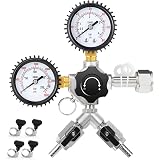
Force carbonation offers a controlled and relatively quick method for carbonating beer in a keg. By setting the regulator to 25 PSI, CO2 is dissolved into the beer over time, typically a few days to a week, resulting in a consistent level of carbonation. The Great Pumpkin Charlie Brown Ale finished at 4.4% ABV, a slightly lower alcohol content than the recipe’s target, but crucially, the flavor profile was excellent. This demonstrates that while exact numbers are important, the sensory experience often dictates the true success of an all-grain homebrew.
Don’t Be a Blockhead! Your Great Pumpkin Charlie Brown Ale Questions Answered
What is all-grain homebrewing?
All-grain homebrewing is a method where you create beer using only malted grains, water, hops, and yeast, giving you complete control over the ingredients and flavor.
Why is using a yeast starter important when brewing?
A yeast starter helps to grow a healthy and robust population of yeast before adding it to your main batch of beer. This leads to a faster and more efficient fermentation, which helps prevent off-flavors.
What is the purpose of the mashing process?
Mashing is a crucial step where crushed grains are soaked in hot water to convert their starches into fermentable sugars. These sugars are what the yeast will later consume to produce alcohol during fermentation.
Why is it important to quickly chill the wort after boiling?
Rapidly chilling the wort after boiling is essential to prevent the growth of unwanted bacteria and wild yeasts that could spoil your beer. It also helps to minimize the creation of off-flavors and ensures a clearer finished product.