Are you contemplating embarking on the journey of crafting exceptional coffee from the comfort of your own home? For many, the allure of specialty coffee, often glimpsed through social media, inspires a desire to replicate those perfect brews without daily cafe visits. While the preceding video introduces the foundational components for a straightforward home coffee setup, it is understood that the intricacies of achieving an exquisite cup extend beyond basic equipment. This supplementary guide delves deeper into the technical considerations and advanced insights that empower enthusiasts to refine their brewing process.
1. The Primal Importance of the Burr Grinder in Your Home Coffee Setup
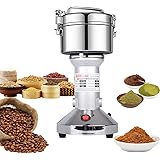
The selection of a high-quality burr grinder is frequently cited as the most critical investment in any nascent home coffee setup. Its significance cannot be overstated, as the uniformity of particulate distribution directly influences extraction efficiency. Trying to achieve optimal flavor profiles with a blade grinder is likened to attempting precision engineering with a blunt instrument; the resulting inconsistency in grind size leads to both over-extracted and under-extracted particles in the same brew bed, thereby yielding a muddied and unbalanced cup.
Consideration of grinder types is paramount. These machines are broadly categorized by their burr geometry and motor design. Flat burr grinders are often lauded for their exceptional grind consistency, which is particularly advantageous for espresso preparation where precise control over particle size distribution is critical. Conversely, conical burr grinders, while potentially producing a slightly wider particle distribution, are frequently commended for their efficiency and reduced retention, making them a practical choice for various brew methods.
Decoding Grinder Capabilities: Single-Dose vs. Multi-Purpose Grinders
The question of whether a grinder can “do it all” — from the fine particulates required for espresso to the coarse grinds ideal for cold brew — is often posed. Machines engineered for this versatility typically command a higher price point due to the precision and robust construction necessitated by such a wide operational range. High-end models, such as the Mahlkonig EKK43 or the Niche Zero, are celebrated for their ability to deliver consistent results across the full spectrum of grind sizes. These devices are often employed in professional settings where diverse brew methods are regularly utilized.
However, the market has seen an emergence of more accessible, yet highly capable, grinders. Devices such as the Baratza ESP, Fellow Opus, and Turin SD40 are frequently mentioned as providing excellent performance for a reasonable investment, often falling within the $200-$300 bracket. These grinders represent a significant advancement in entry-level precision grinding, making quality home coffee preparation more attainable. For those with a more modest budget or specific brewing preferences, a “middle-of-the-road” option, such as the Baratza Encore, is often recommended. While it provides good consistency for methods like pour-over and French press, its capabilities for espresso-grade fineness are generally considered less adequate.
The Portability and Value of Hand Grinders
Hand grinders are frequently undervalued but offer remarkable precision, particularly within their price segment. Models like the Timemore C2 or the Kin Grinder K2 are frequently recommended for their exceptional grind uniformity and durability. These devices are particularly advantageous for individuals prioritizing portability or those operating within constrained kitchen spaces. The travel-friendly nature of hand grinders, exemplified by the ZPesso JX or JX Pro, allows for high-quality coffee preparation to be maintained regardless of location, ensuring a consistent coffee experience on the go.
2. Selecting the Optimal Brewer for Consistent Extraction
Upon the definitive selection of a suitable burr grinder, attention is naturally directed towards the brewing apparatus. The choice of brewer is intrinsically linked to the desired coffee experience and the level of manual intervention preferred. While the V60 and French press are frequently recommended due to their widespread popularity and established techniques, simpler alternatives can often provide comparable quality with reduced complexity.
For instance, the Gem Dripper and Clever Dripper are frequently highlighted for their user-friendly design and capacity to produce excellent coffee. With the Gem Dripper, the technique is simplified to a direct center pour, minimizing the variables associated with more intricate pour-over methods. The Clever Dripper, a hybrid immersion-drip brewer, further simplifies the process by allowing for a full immersion steep followed by a controlled release. This method mitigates the need for precise pouring techniques, allowing for a more forgiving and consistent brew, rivaling the sensory attributes of acidity, body, and sweetness typically associated with more complex methods.
Diverse Brew Methods and Their Requirements
Beyond the simple pour-over, the landscape of brewing methods is vast, each necessitating different equipment and techniques. Immersion brewers, such as the French press or AeroPress, excel at full-bodied extractions due to extended contact time between coffee grounds and water. Pressure-based systems, including the Moka pot, utilize steam pressure to force water through coffee, producing a strong, concentrated brew akin to espresso. Drip coffee makers offer convenience for larger batches, although the control over extraction variables is generally reduced compared to manual methods.
3. Enhancing Precision: Supplementary Equipment for the Discerning Brewer
While a quality grinder and an appropriate brewer form the bedrock of a superior home coffee setup, certain ancillary tools are frequently acquired to further refine the brewing process. These items, though not strictly essential for the initial stages, significantly contribute to consistency and reproducibility.
The Indispensable Role of a Coffee Scale
A precision scale is often regarded as the baking equivalent of measuring cups in coffee preparation. The accurate measurement of coffee grounds and water is fundamental to achieving repeatable results. Without precise volumetric or mass measurements, the replication of a particularly satisfying cup becomes a matter of chance rather than design. Hypothetically, imagine attempting to calibrate a sensitive chemical reaction without precise reactant quantities; the outcome would be inconsistent at best. The ratio of coffee to water, often expressed as a brew ratio (e.g., 1:15 or 1:16), is a critical determinant of extraction yield and flavor balance.
While high-end scales like the Acaia or Brewista offer advanced features such as integrated timers and flow rate indicators, numerous affordable options are readily available that provide the necessary accuracy for consistent brewing. These scales often include features such as tare functions and multiple units of measurement, making them versatile tools in any kitchen.
The Gooseneck Kettle: Precision Pouring for Optimized Extraction
For pour-over methods, the gooseneck kettle is frequently considered an invaluable asset. Its elongated, slender spout allows for meticulous control over the water flow rate and direction, which is crucial for achieving an even saturation of the coffee bed. An inconsistent pour can lead to channeling, where water bypasses significant portions of the coffee grounds, resulting in under-extraction and an underdeveloped flavor profile. Imagine attempting intricate calligraphy with a broad, blunt brush; the desired precision would be unattainable.
However, the necessity of a gooseneck kettle is conditional. For immersion brewers like the Clever Dripper, AeroPress, or French press, where the entire coffee bed is saturated simultaneously, the controlled pour of a gooseneck kettle provides minimal benefit. For these methods, a standard kettle suffices. Even for pour-over, a basic kettle can be used to initiate the brewing journey, with an upgrade to a gooseneck kettle being a refinement rather than an initial imperative. Affordable electric gooseneck kettles are increasingly available, making this precision tool more accessible to the home brewer.
4. The Ultimate Secret: Embracing Simplicity and Quality Ingredients
The overarching principle guiding many accomplished baristas in their early explorations was often a form of “informed ignorance”—a focus on foundational simplicity rather than immediate mastery of every nuanced variable. This perspective underscores the beauty of maintaining a straightforward approach, particularly when first establishing a home coffee setup.
The pursuit of an ideal cup of coffee should not become a source of anxiety or over-complication. Instead, it should be an escape, a ritualistic moment of tranquility. Initially, adopting a single, consistent recipe and focusing on its execution can yield surprisingly satisfying results. This iterative process allows for a deeper understanding of cause and effect within the brewing process without the overwhelm of too many variables.
The most impactful initial step in elevating one’s home coffee experience, prior to any significant equipment purchases, is the acquisition of high-quality, freshly roasted specialty coffee. The inherent quality of the raw material fundamentally dictates the potential of the final product. Sourcing beans from local specialty coffee roasters not only ensures freshness but also supports local businesses and allows for personalized advice on grind settings and brewing techniques. A truly remarkable cup of coffee is often less about the complexity of the equipment and more about the quality of the bean and the simple joy derived from its preparation within a thoughtfully curated home coffee setup.
Perk Up with Answers: Your Home Coffee Setup Q&A
Why is a good coffee grinder important for brewing coffee at home?
A quality burr grinder ensures that all your coffee grounds are a consistent size, which is crucial for even extraction and a balanced, delicious cup of coffee.
What kind of coffee grinder should a beginner consider for a home setup?
Beginners should look for an entry-level electric burr grinder like the Baratza Encore, or a good hand grinder such as the Timemore C2, both of which offer reliable grind consistency.
What are some easy coffee brewers for beginners to use?
Simple brewers like the Gem Dripper or Clever Dripper are excellent for beginners because they make the brewing process straightforward while still producing great-tasting coffee.
Do I need a special scale to brew coffee at home?
Yes, a precision coffee scale is highly recommended as it helps you accurately measure your coffee and water, which is key for making consistently delicious coffee.
Is a gooseneck kettle necessary for making coffee?
A gooseneck kettle is helpful for pour-over methods to control water flow, but a regular kettle works perfectly fine for immersion brewers like a French press or AeroPress.