Every homebrewer embarks on a journey, often starting with a simple thought: “I wonder if I could make my own beer?” This sentiment usually precedes a dive into the myriad of tools and gadgets available. Like many enthusiasts, my first foray into brewing involved a modest starter kit, primarily an extract brew in a bucket. While the video above provides an excellent visual overview of the essential homebrew beer equipment, this article aims to delve deeper, providing detailed context and technical insights into each crucial piece of gear, from foundational items to more advanced setups for the seasoned brewer.
Understanding the function and application of various brewing equipment is paramount for consistency and quality. Whether you are contemplating your very first batch or scaling up to all-grain production, selecting the right supplies will significantly impact your brewing experience.
Essential Homebrew Beer Equipment for Beginners
Embarking on your homebrewing adventure requires a foundational set of tools that streamline the initial process. The primary goal at this stage is to convert malt sugars into a fermentable wort and prepare it for yeast.
Brew Kettles: The Heart of the Boil
A high-quality brew kettle is undeniably the cornerstone of any homebrewing setup. Initially, a smaller 4-gallon kettle, similar to the one mentioned in the video, can suffice for partial mash or extract brewing, often costing around $20. However, for those aiming to produce standard 5-gallon batches, a 10-gallon kettle offers ample headspace, mitigating boil-overs and allowing for full-volume boils as skills advance.
The kettle’s capacity dictates brewing batch size and method. While a smaller kettle can be augmented with cold water during fermentation to reach a 5-gallon volume, a larger kettle enables more precise control over wort density. Material choice, typically stainless steel, ensures durability and ease of sanitation, critical aspects for any brewer.
Grain Bags and Hop Bags: Managing Solids Efficiently
For partial mash or specialty grain steeping, a grain bag effectively contains the grains during the mash or steep, facilitating easy removal. This process extracts fermentable sugars and flavors without requiring a dedicated mash tun initially. Similarly, hop bags prove invaluable during the boil, preventing hop particulate from entering the fermenter, which can contribute to off-flavors or clogging issues. These simple, inexpensive bags are readily available online or at local homebrew shops.
Hydrometers and Refractometers: Precision in Measurement
Monitoring the sugar content throughout the brewing process is fundamental for predicting alcohol content and ensuring proper fermentation. A hydrometer, a time-tested instrument, measures specific gravity by floating in a sample of wort or beer. This device provides accurate readings both pre and post-fermentation, allowing for the calculation of alcohol by volume (ABV).
In contrast, a refractometer offers a quick, small-sample measurement of Brix or specific gravity, especially useful during the boil. However, a significant caveat exists: refractometers do not provide accurate readings in alcoholic solutions. This necessitates specific calibration equations or the use of a hydrometer for final gravity measurements, preventing discrepancies in your Brix readings as the homebrew ferments.
The Crucial Role of Sanitization in Homebrewing
No discussion of brewing equipment is complete without emphasizing sanitization, the most critical step in producing quality beer. Even the most advanced brewing equipment is useless if not properly cleaned and sanitized.
Products like Star San, a popular no-rinse acid-based sanitizer, effectively eliminate microorganisms without leaving behind residue or off-flavors. While bleach can be an alternative, thorough rinsing is absolutely essential to prevent residual chlorine flavors. Regular cleaning with specialized cleansers followed by sanitization ensures a sterile environment, protecting your wort from contamination and spoilage.
Fermentation Vessels and Airlocks: Where the Magic Happens
Once the wort has been chilled and yeast pitched, a fermenter provides the enclosed environment for primary fermentation. Common choices include food-grade plastic buckets or glass carboys, with the video showcasing a versatile bottling bucket that can double as a fermenter. These vessels typically feature a lid with a 3/8-inch grommet, designed to securely hold an airlock.
An airlock, filled with water or sanitizer, allows carbon dioxide (CO2) to escape during fermentation while preventing ambient air and airborne contaminants from entering. This maintains an anaerobic environment essential for healthy yeast activity and prevents oxidation of the developing beer.
Temperature control during fermentation is another vital aspect. An electric thermometer, such as the one highlighted, provides instant, accurate temperature readings, allowing brewers to maintain optimal conditions for their chosen yeast strain. Consistent temperature management influences ester production and overall flavor profile.
Bottling Your Brew: Essential Finishing Gear
After fermentation concludes, packaging your beer is the final step before enjoyment. While some brewers opt for kegging, bottling remains a popular and accessible method.
Bottle Cleaning and Sanitization Tools
Reusing old bottles, such as Guinness bottles as demonstrated, is an economical and environmentally friendly practice. However, meticulous cleaning is non-negotiable. A bottle cleaner, often spring-loaded to spray sanitizing solution directly into each bottle, significantly speeds up this arduous task. Following cleaning, a bottle tree efficiently drains and dries bottles while maintaining a sanitary state. Proper cleaning removes sediment and labels, ensuring bottles are pristine for refilling.
Caps and Cappers: Sealing the Deal
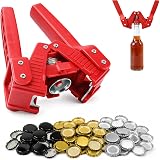
Bottle caps create an airtight seal, vital for carbonation and preventing oxygen ingress. A reliable bottle capper, available in various styles, applies these caps securely to bottles. Most homebrewers start with a basic wing capper before potentially upgrading to a bench capper for greater ease and speed. Additionally, priming sugar, typically dextrose, is added to the fermented beer just before bottling. This sugar gives the residual yeast a food source in the bottle, creating the necessary CO2 for natural carbonation.
Elevating Your Brew: Advanced Homebrew Equipment
As brewers gain experience, they often seek to refine their processes and explore more complex brewing methods, particularly all-grain brewing. This expansion necessitates specialized homebrew equipment that offers enhanced control and efficiency.
Wort Chillers: Rapid Cooling for Clarity
A wort chiller becomes indispensable for all-grain brewing and larger batches. This device, commonly an immersion chiller, cools hot wort rapidly after the boil. By running cold water through a coiled tube submerged in the wort, it dramatically reduces the temperature from boiling to pitching temperature (typically 65-75°F) in about 30 minutes to an hour. Rapid cooling, also known as a “cold break,” helps precipitate proteins and hop compounds, leading to clearer beer and minimizing the risk of infection.
Mash Tuns: Mastering All-Grain Brewing
For all-grain brewing, a mash tun is a dedicated vessel for mashing grains, where starches are converted into fermentable sugars. The video highlights a converted 10-gallon cooler, a popular DIY solution due to its excellent insulation properties. Inside, strike water and grains are combined and held at a precise temperature for an extended period, typically an hour.
A crucial component within the mash tun is a filter system, often a tube filter or false bottom, which prevents grain solids from clogging the outlet valve during lautering (separating the wort from the spent grains). The ball lock and hose barb assembly on the converted cooler allow for processes like vorlauf, where wort is recirculated to establish a clear grain bed filter, and sparging, which rinses the grains to extract maximum sugars.
Auto-Siphons and Bottling Wands: Streamlining Transfers
Transferring beer from the fermenter to a bottling bucket or keg without introducing oxygen is critical. An auto-siphon simplifies this process, initiating a siphon with a simple pump, making transfers smooth and clean. When bottling, a bottling wand attaches to the bottling bucket spigot and features a spring-loaded tip. This ingenious design allows brewers to fill bottles quickly and precisely, stopping the flow instantly when the bottle is removed, minimizing mess and oxidation. The precision of these tools directly impacts beer quality and bottling day efficiency.
Kegging Systems: The Path to Force Carbonation
For many advanced homebrewers, kegging represents the ultimate upgrade in beer serving and storage. The convenience of force carbonation and draft dispensing often outweighs the initial investment.
Mini-Kegs and CO2 Tanks: Compact Solutions
The brewer showcases mini-kegs as an excellent entry point into kegging, especially for smaller batches or experimenting with different brews. These compact vessels integrate seamlessly with larger kegging systems using ball locks. A 5-pound CO2 tank, often acquired through an exchange program at a local homebrew store for an initial deposit around $75 and subsequent refills around $15, provides the carbon dioxide necessary for carbonating and dispensing beer. This system offers significant savings compared to continually purchasing priming sugar and bottles.
CO2 Regulators: Precision Pressure Control
A CO2 regulator is an indispensable part of any kegging system. A dual-gauge regulator, as described, is highly recommended. One gauge displays the remaining pressure in the CO2 tank, while the second gauge shows the dispensed pressure being applied to the keg. This precision control allows brewers to set and maintain specific carbonation levels and dispense pressures, ensuring perfectly carbonated beer every time. This precision contrasts sharply with the variability inherent in natural bottle conditioning.
Sourcing and Maintenance of Homebrew Beer Equipment
As the video suggests, homebrew beer equipment can be acquired through various channels. While new equipment ensures pristine condition, finding used gear on platforms like Facebook Marketplace or Craigslist can be highly cost-effective, provided it is clean and in good working order. Many items, like tubing, are consumables. The video highlights that tubing, often sold for about $1 per foot, needs replacement after “a couple, I don’t know, a dozen batches” because it becomes difficult to sanitize effectively. Regular inspection and replacement of wear-and-tear items prevent issues and maintain beer quality. Furthermore, certain unique items, like tube filters for mash tuns, might require specialized online vendors or DIY modifications.
The journey through homebrew beer equipment is as varied as the beers one can produce. From a basic kettle and fermenter to advanced mash tuns and kegging systems, each piece of gear serves a distinct purpose, contributing to the ultimate goal: crafting exceptional beer at home. Prioritizing sanitation, understanding equipment functionality, and making informed choices about upgrades are key to a rewarding brewing experience. Focusing on the five core essentials initially—a kettle, a fermenter, sanitizing solution, gravity measurement tools, and packaging—will simplify the starting process significantly.
Fermenting Your Curiosity: Homebrew Equipment & Supplies Q&A
What equipment do I need to start homebrewing?
To begin homebrewing, you’ll primarily need a brew kettle, a fermenter, sanitizing solution, a hydrometer to measure sugar content, and bottling supplies like bottles, caps, and a capper. These are the basic items for making your first batch.
Why is sanitization important for brewing beer at home?
Sanitization is the most critical step in homebrewing because it prevents unwanted microorganisms from spoiling your beer. Properly cleaning and sanitizing all equipment ensures a sterile environment, protecting your wort from contamination and off-flavors.
What is a brew kettle used for?
A brew kettle is a large pot where you boil your ingredients, such as malt sugars and hops, to create the beer’s base liquid called wort. For standard 5-gallon batches, a 10-gallon kettle is recommended to provide enough space and prevent boil-overs.
What are fermentation vessels and airlocks for?
A fermentation vessel, like a plastic bucket or glass carboy, provides an enclosed space for your beer to ferment after yeast is added. An airlock is attached to the vessel’s lid, allowing carbon dioxide to escape during fermentation while preventing outside air and contaminants from entering.