Brewing Altbier: A Düsseldorf Classic and the Art of Oxidation-Free Kegging
For homebrewers, the pursuit of perfection often involves mastering both unique beer styles and advanced brewing techniques. As shown in the video above, delving into traditional German styles like Altbier offers a fascinating journey, blending history with distinct flavor profiles. However, the true challenge often lies in the post-fermentation process, particularly when transferring your meticulously crafted beer to a keg, where the insidious threat of cold-side oxidation looms large.
The solution, as explored by Martin Keen, involves adopting a robust pressurized transfer system that effectively eliminates oxygen exposure. This method ensures that the beer, with its delicate flavors and aromas, is preserved from fermenter to keg, allowing its true character to shine. This article will expand upon the video’s insights, offering a deeper dive into brewing an authentic Altbier and detailing the indispensable techniques for achieving an oxidation-free kegging homebrew experience.
1. Decoding Altbier: A Historical & Flavorful German Ale
The term “Altbier,” meaning “old beer,” refers to the traditional brewing methods employed, specifically the use of top-fermenting ale yeast. This style originated in Düsseldorf, Germany, where it is still widely enjoyed, distinguishing itself from the more prevalent lagers of southern Germany. Altbier is uniquely categorized as an ale that is conditioned at colder, lager-like temperatures, resulting in a remarkably clean and crisp profile despite its ale heritage.
The beer’s rich flavor is developed through a carefully selected malt bill. In the video, a foundational grist of 9 lbs (4.08 kg) German Pilsner Malt provides a clean, crisp base, complemented by 1 lb (0.45 kg) of Munich 10L, which adds a layer of rich, malty depth and complexity. Furthermore, specialty malts like 4 ounces of Caramunich I contribute caramel and toasted notes, while 4 ounces of Chocolate Malt imparts a beautiful reddish-amber hue without introducing overly roasty flavors.
For the hopping schedule, a clean bittering hop is favored to achieve a balanced bitterness that doesn’t overpower the malt character. Perle hops, at 1.75 oz (49 g), were utilized in the video to reach an International Bitterness Unit (IBU) of 37, providing a firm but not aggressive bitterness. Later, with 15 minutes remaining in the boil, 0.75 oz (21 g) of Tettnang hops are introduced for their noble aroma and subtle spicy, floral notes, enhancing the overall complexity.
Fermentation is truly where the “old” nature of Altbier comes into play. Despite being an ale, it is fermented with German ale yeast, specifically WLP029, at cooler temperatures—around 60°F (15°C). This lower fermentation temperature suppresses many of the fruity esters typically associated with ale yeasts, contributing to the clean, lager-like finish. The specific brew detailed in the video started with an original gravity (OG) of 1.052 and fermented down to a final gravity (FG) of 1.009, resulting in a well-balanced 5.6% alcohol by volume (ABV) beer.
2. The Silent Enemy: Understanding Cold-Side Oxidation in Homebrewing
Even after crafting a superb Altbier, the quality of the final product can be significantly compromised during the transfer to the keg. Cold-side oxidation is one of the most detrimental issues faced by homebrewers, particularly once the beer has finished fermenting and begins to clarify. This occurs when beer comes into contact with oxygen at cooler temperatures, typically during racking or packaging.
The effects of oxidation are unfortunately irreversible and can quickly diminish the beer’s fresh flavors and aromas. Oxidized beer often develops off-flavors such as wet cardboard, sherry, or stale notes, and its color can darken over time. For styles like Altbier, which are valued for their clean malt character and crisp finish, oxidation can be particularly devastating, masking the intricate balance of malts and hops. Thus, mitigating oxygen exposure during the kegging homebrew process is not merely a best practice; it is essential for maintaining beer quality and shelf life.
3. Mastering Pressurized Keg Transfer for an Oxidation-Free Experience
To combat cold-side oxidation effectively, a closed-system pressurized transfer method is considered by many experienced homebrewers to be the gold standard. This technique involves purging the receiving keg entirely of oxygen and then transferring the beer under CO2 pressure, preventing any contact with atmospheric air. The video demonstrates an excellent method for achieving this, building on valuable feedback from the homebrewing community.
The process begins with preparing the receiving keg by filling it completely with a Star San solution. This initial step serves a dual purpose: it sanitizes the keg thoroughly and provides a liquid medium that can be displaced by CO2. Next, a liquid-to-liquid transfer line, connected to the “liquid out” posts of two kegs, is employed. One keg holds the sanitizer, and the other is empty.
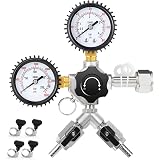
A CO2 regulator is set to a low pressure (just a couple of PSI) and connected to the gas post of the sanitizer-filled keg. As CO2 is introduced, it pushes the Star San solution from the first keg into the second, while simultaneously purging the first keg of air. The air from the receiving keg is allowed to escape through its gas post, which is left open or fitted with a gas connector to prevent sucking in more air. This method ensures that the first keg, once emptied of sanitizer, is now completely filled with CO2 and free of oxygen.
Following this, the sanitized and CO2-purged keg is ready to receive the beer from the fermenter. The fermenter’s liquid out post is connected to the liquid in post of the keg. Crucially, a gas line is then connected from the gas out post of the keg back into the headspace of the fermenter. This creates a fully closed loop: as beer flows from the fermenter into the keg, the CO2 already present in the keg is displaced and pushed back into the fermenter, rather than being released into the atmosphere. This ingenious technique prevents any air from entering either the beer or the keg, effectively eliminating cold-side oxidation.
4. Elevating Your Homebrew Quality Through Deliberate Practices
The implementation of a pressurized keg transfer system, as demonstrated for brewing Altbier, marks a significant upgrade in homebrewing practices. This method not only safeguards the delicate flavors of your beer but also extends its shelf life, allowing you to enjoy your creations at their peak for longer. Such meticulous attention to detail in the brewing and packaging stages truly differentiates exceptional homebrew from merely good homebrew.
Embracing a systematic approach to prevent oxidation, from the moment fermentation is complete until the beer is sealed in the keg, is paramount. By consistently using methods like CO2 purging and closed-loop transfers, homebrewers can confidently present a product that truly reflects their skill and dedication. These advanced techniques, though seemingly complex at first, ultimately lead to a more rewarding brewing experience and superior tasting Altbier, ensuring every sip is as intended.
The Altbier & Kegging Q&A: Tapping Your Questions
What is Altbier?
Altbier is a traditional German ale from Düsseldorf, meaning ‘old beer.’ It’s an ale fermented with top-fermenting yeast but conditioned at colder temperatures, giving it a clean, crisp profile.
Why is Altbier called ‘old beer’?
Altbier means ‘old beer’ because it refers to the traditional brewing methods used, particularly the employment of top-fermenting ale yeast.
What is cold-side oxidation in homebrewing?
Cold-side oxidation happens when finished beer touches oxygen at cooler temperatures, usually during transfer or packaging. It can ruin the beer’s fresh flavors and aromas.
How does oxidation affect homebrew?
Oxidation can cause irreversible damage, leading to off-flavors like wet cardboard or sherry, and can also darken the beer’s color. This diminishes the beer’s fresh flavors and aromas.
How can homebrewers prevent oxidation when kegging beer?
Homebrewers can prevent oxidation by using a closed-system pressurized transfer method. This involves purging the receiving keg with CO2 to remove oxygen, then transferring the beer under CO2 pressure.